The Esports World Cup Foundation (EWCF) has revealed more concrete details about the Esports Nations Cup 2026, confirming how the new global competition will work and how countries will qualify for its debut later this year.
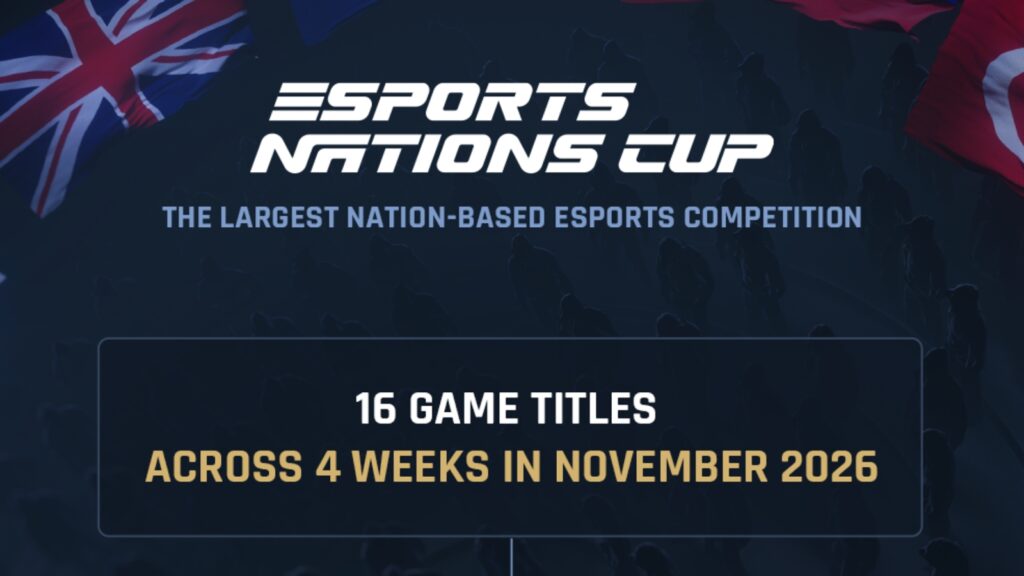
Set to launch in Riyadh in November 2026, the Esports Nations Cup places national pride front and centre rather than clubs or organizations. According to EWCF, it’s the first tournament of its size to fully commit to a country-based format across multiple game titles.
The inaugural edition will span four weeks and feature 16 different games, mixing team-based competitions with solo player formats. Those formats have been developed in collaboration with official game partners, including Electronic Arts, Chess.com, Krafton, MOONTON Games, SNK, Tencent, and Ubisoft, with more titles and publishers expected to be announced soon.
How The Esports Nations Cup 2026 Will Work
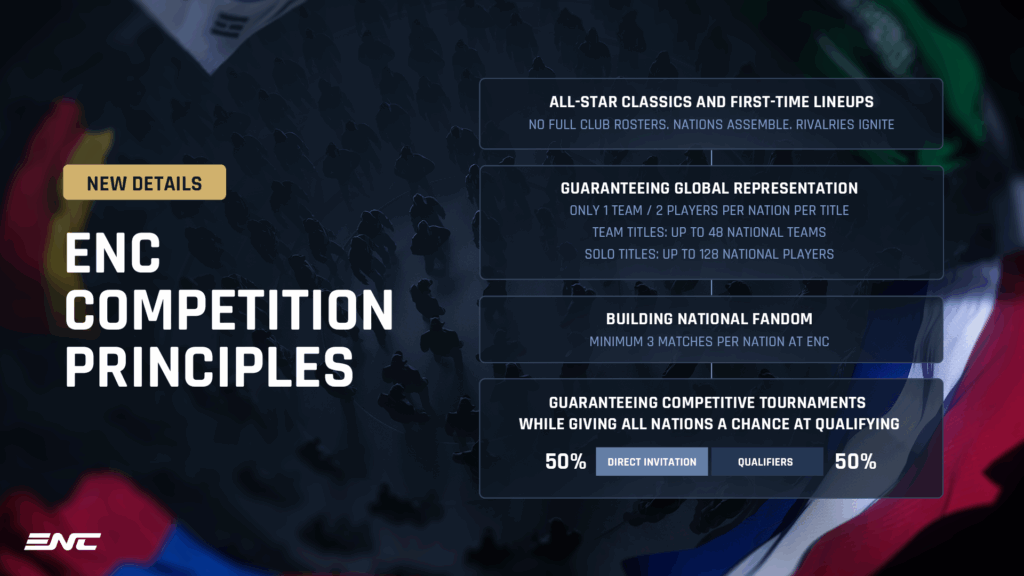
At the Finals stage, team-based games will include between 24 and 48 national teams per title, while solo competitions will range from 32 to 128 players, depending on the game. Each country will be limited to one official national team per team-based title, and up to two representatives in solo events.
In some games, multiple teams or players from the same nation may be allowed to compete earlier in the qualification process, but only one official national representative will advance to the Finals. This is designed to maintain a balance of global competition while still providing deeper regions with opportunities to prove themselves.
One of the biggest talking points is the decision to block full club rosters from entering as national teams. Instead, players will be selected into distinct line-ups made up of each country’s top eligible talent. That means South Korea couldn’t simply send Faker and his T1 teammates to the event, and would have to span different rosters to complete the national team at ENC.
Every team and player who reaches the Finals will also be guaranteed at least three matches, avoiding quick one-and-done appearances and giving rivalries and storylines time to develop on stage.
ENC Qualification
Qualification will be split evenly between direct invitations and open regional online qualifiers. Half of all teams and players will be invited based on how competitors from their country perform throughout the wider esports season in each game. The remaining slots will be determined through open qualifiers, providing smaller or emerging regions with a clear path into the tournament.
EWCF has confirmed that the Esports Nations Cup will run every two years. While the first edition will take place in Riyadh, future events will adopt a rotating host-city model, with the goal of creating long-term stability for national esports programs and encouraging sustained investment at the country level.
More announcements around specific game titles and qualification timelines are expected in the coming weeks as EWCF rolls out its Country Partner Applications.