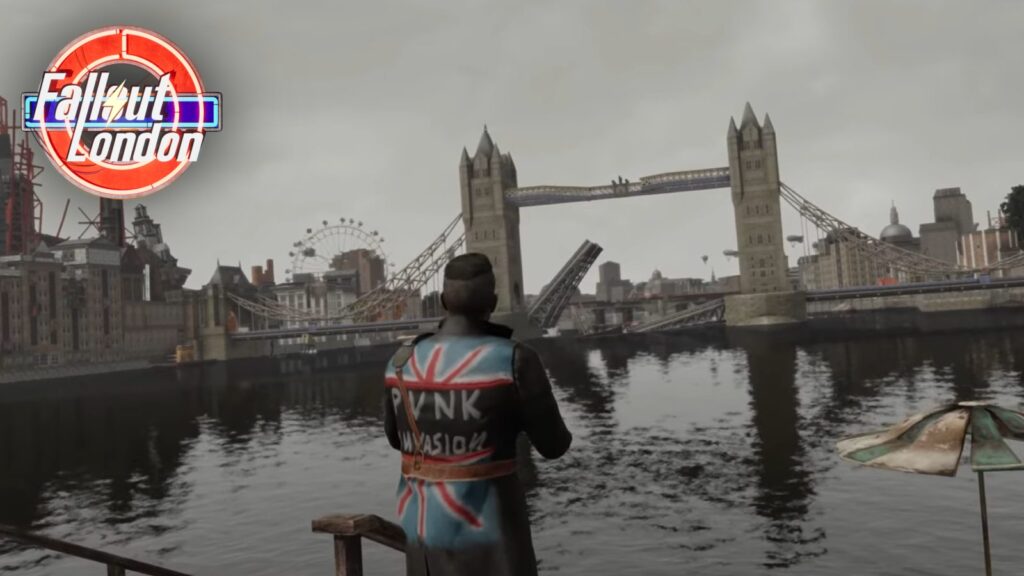
Team FOLON’s Dean Carter has called on Bethesda to improve the quality of the writing that goes into the next generation of Elder Scrolls and Fallout games or step aside and let others take both franchises forward.
In an exclusive interview with Esports.net, the Project Lead for Fallout: London revealed how the success of the total conversion mod has led to the team rubbing shoulders with the likes of Larian and shared his vision for how he’d want to remake Grand Theft Auto: London.
Carter remained tight-lipped about FOLON’s next project, as they look to launch their own original game following the success of Fallout: London, but gave his honest view on the path he hopes that Fallout and the wider games industry could follow in 2026 and beyond.
Read the full interview below.

Q: How gratifying has the response to Fallout: London been from fans of the series?
A: Honestly, it blew us away. I remember when we were building this, we were honestly thinking, based on other popular mods that were out at the time, we might get 100,000 people that would play it and that would be perfectly fine.
Then we discovered that GOG had us at 500,000 in the first 24 hours, and now it’s well over a million. It’s bonkers, it really is.
Q: What’s the best feedback you’ve heard or seen so far?
A: So the one that always speaks to me, obviously, we like all the advice and even the criticism is always helpful, but the one that always speaks to me was someone who said, Fallout London is to Fallout 4 what Fallout New Vegas was to Fallout 3. And I was like, you can’t get better compliments than that, really, can you?
Q: Is there anything the community has picked out that you wish you could have done differently now or changed?
A: Oh, completely. So one of the biggest ones was actually the first DLC that came out. Originally, the term DLC was used quite loosely. It was basically the things that didn’t make it into release for various different reasons.
One of the biggest bits of feedback was that we didn’t signpost a lot of the quests well enough for the main factions. People would just instantly, suddenly be part of the main faction, and they wanted a bit more lore about certain points.
That feedback allowed us to then put that in, and that’s why we had so much more content in that DLC.
Q: What are your thoughts on Todd Howard’s recognition of the hard work you all put into Fallout London?
A: Honestly, we did this for the fans more than recognition.
Todd Howard has said he hasn’t played it, but he’s aware of it, and I mean, that’s cool, but we don’t really do it for that. We’re not really here for head pats. We wanted to make something for the fans and for ourselves.
We wanted to play Fallout in London, and we suddenly had this huge community that also wanted to do that, whether or not Mr Head Honcho wanted to play it or not.
To be honest, it doesn’t concern us that much. It’s for fans. It really is. I know that sounds like a cliche, but it is true.
Speaking as a fan, I liked Fallout 4. I liked it enough to lead a team for the past five years building a mod on top of it. But ultimately, I would never play that game for its story. I think I always got to the point where, and you know spoiler warning, when you get to Sean in the Institute, I was like cool, in my head it is a justifiable response to go, my kid is safe. Let’s go do something else.
When you compare that to some of the lore building that was in, like New Vegas, and considering that they managed to do that in 18 months, it is crazy to think that they have nearly 10 years before Fallout 5, and I still think it’s going to be a Fallout 76 kind of game, unfortunately.
That’s a game that was only fun for us when we wanted some downtime, and we played it with the other devs. We couldn’t get into Fallout 76 otherwise. None of us could.
Unfortunately, I think it’s sadly a trope that Bethesda keeps repeating, but that’s just me as a consumer, as a modder. We definitely fell flat in some of our quests, but that also came from trying to make it blend with the Fallout 4 genre.
Every time we went against the grain and tried doing something that was more in-depth or more challenging or outside the norm, we got negative feedback for those quests because people expected a Fallout 4 experience, which is why we found it quite amusing that we then got criticized when we sort of followed in the footsteps of the Fallout 4 quest line.
I think people just want a good game at the end of the day. They don’t care if we make it, they don’t care if Bethesda makes it. They just want good RPGs.
Q: You might not have had much direct communication with Bethesda, but some of their competitors reached out to you and the team. What is the most surprising thing a AAA veteran has asked you or said about the work that’s gone into Fallout: London?
A: For us, it was actually the fanboying that we got. That was weird to see.
We got invited by both GOG and Overwolf in respective years to Gamescom, which is a big industry event, and we ended up talking to people from Larian and even EA, and we just had these people just being nerds with us.
They were asking us questions like “How did you do that at that time?” It’s the sort of questions that we would get from just like the general public, but these are people that we consider idols.
We’re talking about people who are as senior as Todd Howard is as the head of Bethesda. Everyone knows him. We had those people in their respective companies doing the same thing.
We felt hugely out of place. It was pure, pure imposter syndrome.
Q: How did the chat with the people from Larian go? Are you and your team being lined up to make Baldur’s Gate 4?
A: I mean, I wish! That would have been great if we were offered that, but no, like a lot of people, they just wanted to meet us and say hello.
We have definitely gained a lot of contacts that wouldn’t have been possible if we hadn’t done this, for sure. I would love to be able to work on something like Baldur’s Gate or the like, but we have our own plans at the moment, and that’s what we’re moving forward with.
Q: Do you think Bethesda’s hands-off but supportive approach to your mod is a blueprint for how IP holders should treat fan creators?
A: It’s a weird one because I feel like Bethesda have been great. Obviously, yeah, there were no lawyers at our door but I feel like they’re not quite sure what to do with their platform.
This is their third instance of trying a form of paid mods and even though I was against the idea originally with the first iteration I kind of wish they had just stuck to their guns. With 10 years hence or so we would all have become used to it by now, whether we like it or not.
They’re now in their third rendition of it and from what I know from behind the scenes, it’s still not that good, even for us as a company now, we’re still umming and ahing about whether we still want to be involved in it.
Personally, I don’t think it gives enough kickback for the work that is expected. I feel like they could definitely monetize their creation kit more. I mean, it’s proprietary, so I definitely think that they could with such a huge modding scene.
They could do something a bit like the Minecraft series or what Valve did. A lot of these fantastic games came from mods. The modding scene is there, but it’s not utilized correctly.
Sadly, again, it seems to be that it’s utilized in a way to fix their mistakes rather than to move forward as a company, I feel.
Q: Now that Fallout: London is itself now a platform for other modders to build upon, just how good does that feel for you and the team to potentially be laying the groundwork for others to go on and do what you’ve done?
A: Fallout: Manchester or Fallout: Liverpool? We would love that, honestly.
There are definitely some cut quests which are not planned in any of the DLCs that could have been implemented, which we have voiced, but that just wasn’t in the scope of what we could do before we moved on as a company.
If a modder wants to get involved in them, they absolutely can. That’s what we’d love to see. We’re modders at the end of the day. We’re never going to say no to other modders wanting to do stuff.
We’ve been contacted by quite a lot of smaller modders. I think a lot of people in the modding scene sort of see Fallout London as its own niche, so a lot of people will play it as vanilla as possible. Some of them might add in smaller things like an apartment complex or a settlement but there’s not many quest mods.
I think people are also well aware that, given the nature of how large we built an entire game on top of another game, it’s not the easiest to mod, and there are stability issues that come from building a game on top of a game.
I’ve heard of people who have been looking into it, and we give advice and help if they ask, but I don’t know of any new worlds or spaces coming up. I also think partly, in all honesty, it’s because it’s a modding scene for a decade-old game. I think a lot of people have moved on.
Even ourselves, when you go back to that question of would we do more, the answer is probably not in Fallout 4. We were really contemplating this verified creators scheme or whatever it’s called now and we asked ourselves “do we want to do this?” We’re really not sure.
Q: Do mods like Fallout: London make their base game more valuable, and could that lead to companies like Bethesda feeling more bullish in pricing up Elder Scrolls VI or Fallout 5 as $100 games, given how much content they and the modding scenes deliver?
A: It’s hard because when you work as we do now as a company, you start looking at things from that aspect. You have to pour in hours and hour and hours of your life, especially if you’re a small team, and realistically, because you’re an indie team, you can only put a certain price point on your work.
I do know for a fact that probably the reason why these big companies put such a large price tag on their games is that, at a certain level, the money sort of doesn’t matter. For example, if my printer breaks, I need to try and make it work again, whereas they’ll be like, just buy a whole new top-of-the-range printer. There is a lot more wastage. Maybe that comes with the price.
I’m not an economist, but I do know that the concept of putting your price up to like $100 and beyond when the economy is currently in the state that it is, is not great for anyone, even myself.
I don’t play that many games anymore because I just don’t have time, but I purchase maybe one or two games a year compared to when I was growing up, when I probably had less money, because back then I was buying games left, right and centre. In a Steam sale, I’d buy 10 games I wouldn’t play, whereas now, even if Fallout 4 is on sale, it only gets knocked down to about £40 or something. That’s crazy for a decade-old game.
I don’t know the answer, but I just, yeah, I think it’s a weird time to have very expensive games.
Q: Is there a hope that, given your success on Fallout: London, FOLON can be to Bethesda what Obsidian were for New Vegas on some paid-for Fallout sequels or spin-offs in the future?
A: It’s a tough one because as a company we need to stand on our own two fee,t but I’ve always been a fan. I love Fallout. Even after so many hours of blood, sweat and tears, I still love it.
But yeah, that would definitely be a crisis of conscience for a lot of people on the team because to go from modders into game development, it’s a bigger jump than a lot of people think, but do we want to stay as modders? Do we want to maybe do these creation things where we do get paid by Bethesda to do that, albeit not that much?
I mean, if Bethesda turned around and said, “Would you be interested in Fallout 5?” I think, honestly, a lot of the team would probably want to get involved. That’s the reality because we just love Fallout, but I think there also comes a point where you have to ask, do you want to be known as just a developer of a Fallout game, or do you want to create your own IP?
We’ve actually had people go to Bethesda, and I’m not going to say who it was, but we’ve also had some messages from them to say that the creative control is a very different element. You are following a guide. You might be at your dream company but you’re not doing your dream work at that company.
If you’re doing your own, if I wanted to turn Sebastian Gaunt from Fallout:London into a pink monster, I can do that. If I were working at the Bethesda office, I couldn’t. It would go through 10 levels of approval first. It’s very different.
I think that’s the case across the board, too, because a lot of gamers complain that these companies are getting too corporate.
I assume when GTA 6 comes out, that’s going to completely rock the world again as it did before but when you see the same game with a different skin being repeated every year, you know that’s just a corporate game.
Unfortunately, Call of Duty lost my interest when I played World at War, and that was many years ago, but I guarantee you if I picked up the latest one it’d just be the same game, just different graphics. I know they will use a lot of the same animations too and all that sort of stuff to save costs. It’s at the point where the new game is just the artwork they stick on top.
FOLON stands for For Our Love Of Nostalgia, and we want to really go back to making RPGs where you could just put what you wanted into a game and create what you want. We want to keep the corporate side of it out.
Q: Are there any easter eggs in Fallout: London that you’re worried players might never find?
A: We went with a different attitude towards easter eggs, which is that we wanted a lot in the game, but to be more subtle with them.
Quite a few people have now realized at the start that there is a mini with a chair on the top, which is, of course, a Mr Bean reference.
Personally, I am not a fan of the ones where you have to move chairs in a certain order, and then suddenly something falls from the ceiling. It’s really out of character. I like lots of subtle ones where if you know it, you know it. If you don’t, you don’t. That’s great.
If you were to go on the TV Tropes website they have hundreds of them listed out for Fallout: London so props to whoever is running that because they have found literally all of them. We had a good old chuckle reading that, especially where they picked up on the really niche references we all enjoyed adding into the game, assuming people might not get them.
Q: What’s the most misunderstood feature of Fallout: London?
A: This is pure spoilers for the main story.
The actual twist at the end of the main quest is not so much that you’re a clone. I feel like that’s quite obvious even halfway through the game, but a lot of people were like, I guessed it!
The point wasn’t that it revealed you are a clone. It was about how the Smythe character had sort of taken over Parliament and what they are doing.
We purposely went with an ending to subvert expectations, but I feel like a lot of people misunderstood that.
I feel like if you’ve played any video game in your life, you’re going to think you’re probably a clone straight off the bat, so it was more about how this character has manipulated his way through the world and on what scale. That was actually the twist. Not that you are the same person. I think that was quite obvious.
Q: What engine limitations of Fallout 4 did you have to break to make London feel authentic?
A: The biggest one was the train system. In Fallout 3 they had the abandoned DC metro but we actually have a fully animated train system. That was something we had to get around. A lot of it was the animations and how to do things, and the biggest flaw with the modding scene, I would say, is the lack of documentation and halfway through development, they took down what documentation was there.
The other famous one for us we needed to work out in order to make work was making the London Eye actually disappear.
It’s linked to a picket fence in Sanctuary, so that actually gets disabled during the quest, and then, because it’s linked, it then removes our wheel. How we come up with that, I don’t know!
Honestly, the biggest difficulty was just the fact the 3D team had to build them, like St Paul’s and Parliament. They took a very long time because there was no real way we could make them out of the Fallout 4 assets. We were quite lucky in some ways because downtown Boston has that New England look and feel, so we could match a lot of the look of bricks, but when it came down to monuments, there was nothing. A lot of that had to be built from scratch.
Q: How did you optimize the mod for the sheer density of London to make it work on the Creation Engine with normal hardware?
A: We were quite lucky in the fact that I was still running a Windows 7 computer for a very long time so I was basically the tester on the old hardware. If at any point it melted, we knew that we’d gone too far.
There are lore reasons for having all these large walls around the world, but it was for optimisation too. Everyone complained in the original game that Boston was very, very small, and we were effectively making an entire map that was that dense. We knew we were going to have to implement something that would allow much of the world to be hidden when you’re at ground level, otherwise it wouldn’t have been possible. That’s why those walls went in, and that’s also why we had to actually cut some of the worlds out.
When you go to the St. Paul’s area, if you go through the gate, suddenly you go into a different world, and it’s all an illusion because otherwise it just absolutely would not run. It would just crash. You’d hit the integer limit. It was the only way we could get around those limitations.
Q: Is the verticality of Fallout: London what you hope to see more games, not just Fallout, improve upon in their game and world designs?
A: The geography of London is actually quite flat. The hills are outside the centre of the city, so we had to invent quite a lot of landscape, which is why we had a canyon and various things like that, so we actually started by creating a lot of negative elevation to try and give the illusion of actual elevation. You’d actually go down to then have to go up to somewhere like a building that’s now above you. That was just a clever way of doing it.
I definitely wish that a lot of the RPG games that are coming out now had that sort of scale. The Dishonoured series is great for that, but unfortunately, a lot of games are quite flat, but it depends too. If you’re doing something on Mars, you’re not going to have a bunch of skyscrapers to climb.
Q: Given how many fans seem to want to see Fallout: New York in the future, have you and your team effectively given Bethesda the perfect playbook to work from in order to up the ante on the verticality and claustrophobia that was achieved with Fallout: London?
A: Yes, it could be made to feel very claustrophobic, but I really wouldn’t like to see it. I think New York would be an interesting setting for a Fallout game, sadly, I really think New York is just so overplayed personally. It’s in so many games. It’s the go-to place.
Even during Fallout: London’s development, we had Watch Dogs Legion come out, and then there was another game that came out with London as the setting. We were sitting there thinking that London has suddenly gone from a place that only had a couple of games to there being 10 London-based games.
Q: How much of the weirdness of the original Fallout games did you try to inject back into the London setting?
A: We wanted Fallout: London to basically be a New Vegas experience, but within the Fallout 4 engine. You’re always going to have the Fallout 4 gunplay and the lik,e but we wanted to bring more nuance back into the game and the sort of questing from Fallout New Vegas. That was definitely based on the original Fallout games.
It was a culmination of cherry-picking all the best bits. I think only a mod would be able to do that because everything else has to sort of follow a line. You wouldn’t get away with making Fallout 1 now, but as a mod, we could cherry-pick the best bits.
Q: Does that mean that we will never get a 3D remake of the first two Fallout games in your view?
A: I don’t think those games could be made now. Not only do I not think they would particularly translate well, but a lot of the humor and the things you’re allowed to do in those games would jar with a 2026 audience.
Back then ,you could play as a porn star and go around hitting kids in the groin with a sledgehammer. That isn’t gonna fly in 2026. It’s just not gonna happen.
Q: Once you’ve released the next two DLCs and restored the so-called ‘Yes Man’ path to the main quest, inspired by New Vegas, will that be the end of FOLON’s work on Fallout: London?
A: The next DLC to come out is actually called Last Orders. That one’s just going to be plugging a lot of the cut quests. Wild Card, as you said, will bring in that ‘Yes Man’ option, and it will be based around the gangs.
Anyone that’s played the mod has realized that it has a slightly awkward cut when you get to the end of the Vagabond or the Isle Of Dogs quest line. A pop-up appears, and then you sort of get on with the rest of your life, which was serviceable, but it wasn’t as intended. Unfortunately, it was cut because the person who was scripting it actually got conscripted in the Russian-Ukrainian war. Obviously they had more to worry about than modding and that’s fair enough.
We would like to finish that off with Wild Card, and that would be the equivalent of a ‘Yes Man’ ending to sort of go back to that New Vegas vibe in order to cover all of the main factions, and actually it is ‘Yes Men’ with different options really.
You could do it with the Isle of Dogs or Vagabonds, so there are different ways within the ending if you like.
Q: Once that ending is an option, will that almost be Fallout: London, The Director’s Cut version with the canonical ending?
A: One should never comment on what the canonical ending is, but yes, I think a lot of people have said that that was the one thing that they were missing because you have everyone that’s fighting over who should be in charge, and then you’ve got these outliers. I think people always love an underdog.
Q: You avoided forcing Super Mutants and FEV into Fallout: London. Do you think the biopunk horror of the Thamesfolk is a more European take on the Fallout aesthetic, and how do you think you and the team would go about imagining other local spin-offs in places like Paris, Barcelona or Amsterdam?
A: I currently live in Norwich, so I can tell you that Thamesfolk are definitely around beyond London! But I definitely think that if you’re going to create something like Fallout: London, the reason why it works is that the British people are very much someone who are prepared to take the piss out of themselves.
A lot of people might say that Fallout is based on Americana and it’s a caricature that doesn’t work outside of an American context, but no one caricatures themselves other than the British, so I think you need to find another group that’s prepared to do that.
I don’t imagine Parisians having that same sort of humour about Paris. They typically don’t like making jokes about themselves in the same way. I actually think Germany could be a very interesting one, especially if it’s following Fallout lore.
With Fallout: London, we based it so there was East and West, so going by canon, that would be very interesting as its own storyline in a German context. You could definitely go into Bavaria and explore that as a wasteland. You just need to find the people that would enjoy being caricatured rather than feeling insulted.
Q: Rockstar considered taking GTA to Tokyo, Istanbul, Moscow and even Rio De Janeiro. How would the FOLON team approach taking Fallout to a new location and does one or more stick out to you as particularly interesting?
A: I always actually thought that Venice could be quite fun. I’m a level designer when I’m not running the team and I think level designing in Venice would be fantastic.
How well that would play, because Venice is quite small, is another question. I’d reckon that’d be more similar to a DLC expansion like Far Harbor.
Q: What are the specific mechanics in Fallout: London, like the functional trains, that you think Bethesda should adopt for Fallout 5?
A: I’m really worried that they’re gonna keep going with the Creation Engine.
I understand that it is proprietary. Don’t get me wrong, there are a lot of pluses to it. I’m not just someone that’s going to sit there and lie and say it’s a terrible engine. It could be better, yes, but it’s not a bad engine but I do think it started to show its age. It needs to be overhauled somewhat.
If they can overhaul it, then there’s no reason why they couldn’t push its limits and start adding things like drivable cars, maybe even metro systems like what we built in Fallout: London. I mean, if we found a way, I’m sure they could bring some of this stuff back into Fallout 5.
Riders would be a great one. We have horses in Skyrim. I don’t see why they couldn’t get something like that in Fallout 5, too.
Q: What would be the technical legacy issues that an engine change for the next Bethesda games would fix immediately?
A: Load screens and optimization, without a doubt.
That was our biggest complaint, rightly so from the public, that our game wasn’t optimized, and that’s because it was far too late in development to be able to change it, and it was because we as gamers did not want load screens. So we built things like the East Minster, which is in the Trafalgar Square area and is notoriously one of the more unstable areas in the mod, and we were just trying to literally slap down walls on anything to optimize it by the end.
That’s just because we didn’t want to have load screens. It would have really taken away from the vibe and we paid the price for it because the engine wasn’t suitable for what we wanted to achieve. If they have to upgrade it, that’s what they need to solve: get rid of the load screens and allow better optimization.
Q: In Fallout: London, your choice of faction changes the world in visible ways earlier in the story, whereas in Fallout 4, the world only really changes after the final mission. Is this something we need to see in the next Fallout and Elder Scrolls due to how you’ve raised the bar?
A: Absolutely. There needs to be progression. You need to feel like you’re doing something. It’s all well and good having random guard number seven saying I like the cut of your jib but ultimately it’s not relevant.
If you’re taking over a part of the map with some people, they need to move into that area. Then they need to build it up. I mean, we put that into Fallout: London. I don’t see why they couldn’t do that in a sequel made by a big, multi-billion-dollar corporation.
The crater was one of the big changes in Fallout 4 but that was at the end of the game. Change should be present throughout the game to show that there’s an idea of progress. I forget if it’s in Last Order or Wildcard, and I’m sure Callum, our Lead Script Writer, will kill me for saying that, but there are plans to have continuation. That was one of the big things that people requested from Fallout: London, the ability to play the game after you’ve finished it.
One of the things we will have is areas around the map which will show your progression and the impact of what you chose as the victor, so to speak. You need to have that in your games. It draws you in. It’s more immersive. It shows you which side is winning. You’re doing something right.
Q: A former technical director at Rockstar has said that taking GTA outside of the USA is too much of a risk given the size of the budgets now. Do you think that risk is real, or would it be a big opportunity to go beyond the USA, as Fallout: London has shown?
A: We did get GTA London way back when, so there is a precedent there, and I would love to see GTA in London again.
If you remember, we did have the Getaway and its sequel, and that was great, but doing GTA London with the sort of budgets Rockstar works with now would be something else. I would be really, really excited to play that for sure.
Q: What have you learned from making Fallout London that is key for any game that wants to bring London to life in a video game?
A: You have to realise that a lot of London is obviously residential, so it’s how you get in all that residential space without it just being a tour of all the big landmarks.
London is so old that almost every road has a building that acts like a point of divergence that was built in the 1500s or something. You’ll have this building that you need to build, and it needs to look as historical as it does, and next door could just be a generic housing block, but you need to be able to balance what is going to be a recognizable landmark and what would also be a recognizable landmark to a Londoner, and that was something that we did.
We had a lot of feedback on that, where we actually had people from Bromley, which is just a suburb, contact us and ask if one of the developers lives there because of the keystone landmarks that were put down around the area. By landmarks, I’m not talking about Big Ben. I mean, getting the local pub right, or where the McDonald’s is.
I actually did grow up in Bromley, and we always had this hatred with Croydon, which is why Croydon is a crater in Fallout: London, and that’s the reason why when we launched the mod, people from Croydon were commenting to ask if someone from Bromley had worked on it. Yes, you can say it!
The equivalence of that was enough for people to think someone had to live there to know that so you need to literally go to these places and consider what will people in a video game need to recognise.
Sadly, that’s one thing that a lot of games don’t do. They’ll set a game in San Francisco and they’ll put the Golden Gate Bridge in but otherwise it’s just a generic city.
We had an interesting experience with Assassin’s Creed Syndicate. We used it as a reference for certain buildings, but we realised that their interior floor plans were just completely nonsensical and made up.
I’m pretty sure we’re all on a load of governmental lists now because we were looking up floor plans for Parliament, floor plans for bunkers, typing in search queries like how far would the largest nuclear blast reach in London. I bet GCHQ were wondering who are these people?
Q: What is the feeling among the FOLON team and their hopes for Fallout 5 and where the series goes next?
A: Fallout 76 is covering the Corn Belt. I think the obvious place to go next is back to New Vegas but would I like to see that? Probably not.
I would say Texas. You’ve got interesting things you could caricature down there, and I think for me it’s actually part of why I find Fallout 76 to be a bit boring. The world space is great, but the characters are just a bit generic. We know this because they had to import so much from the other settings and change the lore so we had the Brotherhood of Steel and various other bits to make it more interesting and recognisable.
That wouldn’t be the case with Texas. The place is already a living caricature of itself so they would have a lot to work with.
Q: Would you welcome it if the makers of the Fallout TV show wanted to add Fallout: London to their world, or would you be worried about what they’d do with your creation?
A: We are a company that made it for the fans. We are fans who made it for the fans. If Bethesda decides they’re going to do it their way, then they can do it. It’s their IP. They can do whatever they want.
I think it’d be interesting for fans to see, but one thing I would say, and I might sound a bit big-headed here, is that because Fallout: London has been so well received, I feel like a lot of the same fans will probably compare what we created with Bethesda’s work. Because ours is just a mod, and theirs is the real IP, we are catering to fans who really love our mod so they may look at other versions and reject them.
We actually see this happening now with the Oblivion remake by Bethesda. Some people instantly rejected that idea in favour of waiting for Skyblivion mod to come out. It hasn’t even launched yet, and you have modders and fans of the mod, who are very loyal people who stick with you, saying they will just keep waiting for the mod.
It’s just a lot of work. Let’s hope that Bethesda takes the series to Texas and they can add in so much more stuff and reuse assets. It would be a lot easier.
Q: What would your dream Project look like if you had a 500-person team and a AAA budget like the sort of money that Rockstar and Bethesda can play with?
A: Honestly, it will still just be what we’re working on now, which sadly I can’t talk about.
We want to make what we want to make, and the only thing a benefactor would do is give us the security that a startup doesn’t have. It would mean that we don’t have to be penny pinching. It means I could pay myself a decent wage.
If any investors out there are reading this, feel free to hit me up but honestly we’ve got a vision. We’ve got something that will work. I’m very happy with it and it means as an indie team, it will have an indie vibe to it. If we had all the money in the world, I would still want it to have an indie vibe. It would just be a little less rough around the edges, I suppose.
Q: What would you do if Rockstar came to you and said we want FOLON to set out the vision for GTA 7? The setting, the story, everything!
A: I think the team would take me round the back and shoot me like Old Yeller but I would love to do GTA London.
Our team is so bored of building London. I’d be sitting there saying hey guys, we’re going to build it again but for the GTA engine!
But yeah, for me it would be GTA London, and I think it’s because I’ve now got to the point where I’m starting to run little side hustle tours of London because I have learned so much about the city and know it so well because of Fallout: London.
We spent every day looking at Google Maps, and I literally know it like the back of my hand, so I just feel like our lives are going to revolve around this city now.
I know so much about London now. All it means now is that in the unlikely situation where we were to do a sequel or a prequel or something, it would be more of a case of already knowing the information off the top of my head rather than having to research it for a specific thing.
Q: Where do you think would be the most interesting part of the world to visit in the Fallout universe based on what we know of the lore?
A: I would love to see the Fallout 1 setting again. I think it would be great because that’s where it all started and to really go back to it would be something.
I actually like the Fallout TV show. I know a lot of people were saying that the second season isn’t so good or whatever but I feel it’s definitely got a Fallout 4 vibe to it, which is fine.
I like Fallout 4 but I would like more of a Fallout 1 vibe and I feel like if you want a Fallout 1 vibe in terms of a show, you should probably watch Silo. I think Silo is a good shout for that. It’s a bit darker and grim.
I prefer Fallout to have that sort of tone rather than going all slapstick. It’s a bit more humorous but the humour in the first series was dark humour. The slapstick stuff needs to stop because that’s not what Fallout is.
Q: How can Bethesda remix the formula for the next Fallout and Elder Scrolls games and beat the expectations that their fans have for it after Fallout 4 and Skyrim?
A: That is a very, very interesting question. With the greatest respect to Bethesda, I feel like they’ve probably gone one game too far, if I’m honest.
I feel like it’s time to go off into the sunset and look at selling off your IP because people like the franchise, I’m just honestly not sure it’s in the right hands, and it really hurts me to say that because I love Bethesda.
The writing has just gone downhill. I know as a company, they have to try new things, but Fallout 76 caters to an audience, but it doesn’t cater to the people that want to play a single-player Fallout game.
I think if they’re gonna stay on board, they can stay with what they’ve got. I don’t think Skyrim is the best game of all time like some people. It’s a very, very good game. I just feel like they need to improve the writing, I really do.
I reckon if they could inject in the quality of some good writers, then the next Elder Scrolls game will be great and the next Fallout game will be great but they need better writers, honestly.
Everything has its own pros and cons but the one thing we agreed on with Fallout: London is that we wanted to make it more dark and gritty because that’s what Fallout actually is, and I think Bethesda are taking it in the opposite direction.
Q: You’re moving to Unreal Engine for your next project. What is the one Creation Engine quirk you’ll genuinely miss?
A: I’m a level designer so I’m used to certain key layouts and the first thing we have done, and this is all proper to Callum, our Lead Scripter, is to get me all the controls for the Creation Kit mapped in the Unreal Engine.
I can asset scroll, I can apply everything, I can align everything as I would in the Creation Kit in the Unreal Engine. I don’t know if that’s just me not wanting to change or he just couldn’t be arsed dealing with a boomer complaining he doesn’t know where the keys are but yeah, I can basically use the Unreal Engine at the same speed and competence as I would in the Creation Engine. Props to him for sorting that out.
Q: Given the success of Fallout: London, do you believe the total conversion mod can become the new Indie Alpha for teams or individuals looking to break into the industry?
A: Yes and no. I feel like it has obviously been a successful vehicle for some people if they want to try and get jobs, or if they want to try and launch into something.
We’ve seen that with the guys who did the Forgotten City. They did a very similar thing. The Enderall project too. There’s definitely a precedent for it now but the one thing that I would say is that what our team and those two that I mentioned have in common is that we took this seriously. We were basically running a volunteer company. Like we were coming online after doing our nine-to-five jobs, and we were treating this very, very seriously, and I think unfortunately, this is why there is this trope of large mods that you know are destined to die. They just never come off.
Even Todd Howard said it’s such a surprise because a lot of them don’t make it, and that’s because a lot of people go in with a few hours of free time here or there. I won’t speak bad about any projects but I remember applying to Fallout: Miami before Fallout: London was even twinkling in our eye that’s still ongoing. These projects have now been taking nearly seven or eight plus years to get to where they and they’re not out yet.
If it is just a pure fan-made thing that you just want to create, then that can take you for as long as you want, and that’s fine. But there will always be people who want to join these projects and try to use them as a vehicle to get into the industry or do something afterwards, and I feel like in order to do that, you have to run it as seriously as you would expect to work when you’re in the industry. Unless you do that, it just won’t happen for you.
Q: In 2035, when people talk about the Team FOLON legacy, do you want to be remembered as the team that fixed Fallout, or the team that redefined the independent RPG?
A: I need to be very careful because of what we’re working on now, but I want to just be remembered as this group of pyjama developers who created a massive world out of someone else’s IP and saw their work treated as the same as a multi-billion-pound corporation. I think that is crazy.
The fact that we get invited and get to speak to these people, and ultimately, we are indie developers in every sense of the word, and pre-indie developers before that. Just modders. But our work was being compared to the games of a multi-billion-dollar corporation. I think that’s our legacy, and I think it always will be, and I think that’s mind-boggling. It really is.